
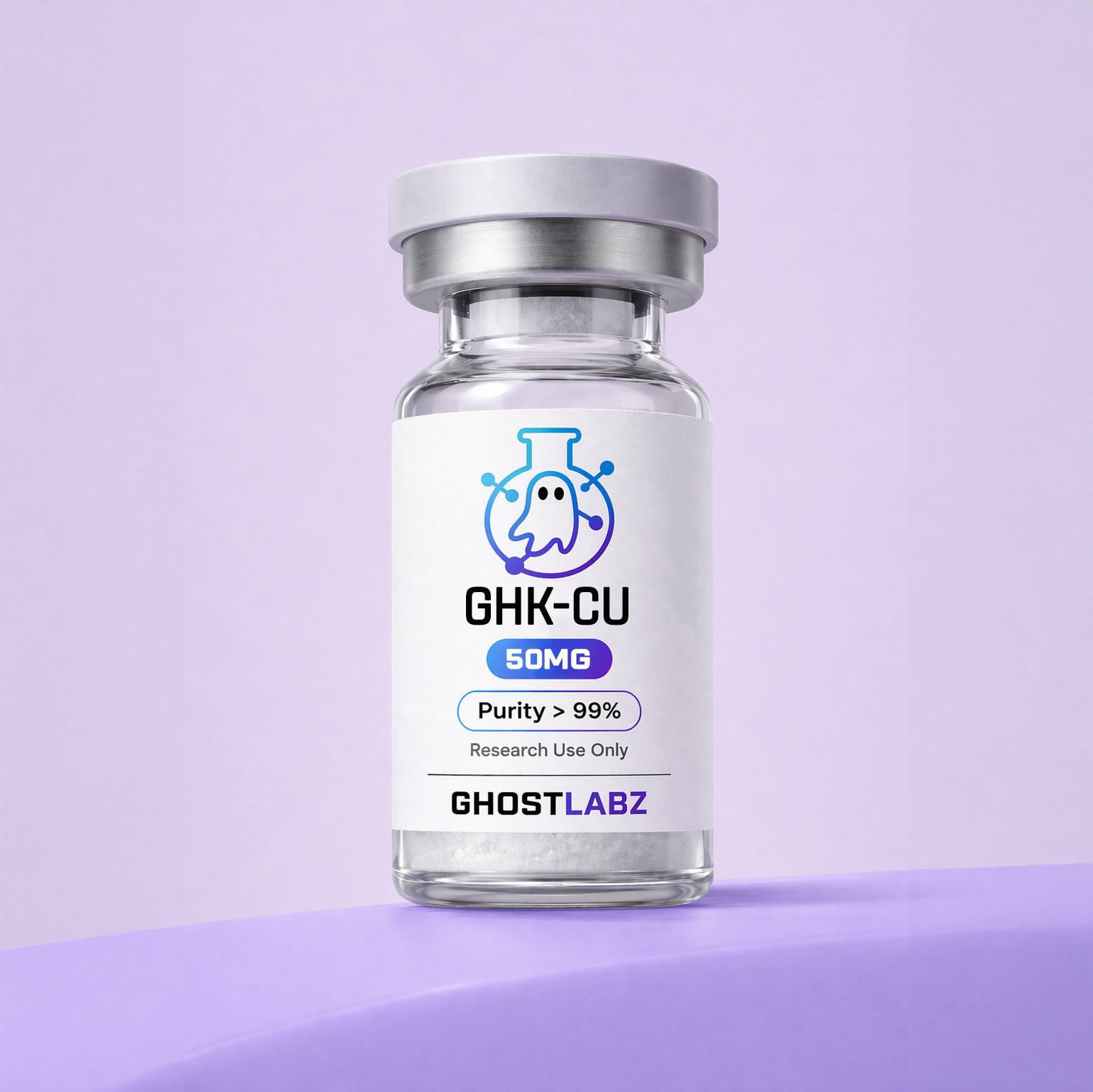
GHK-Cu
GHK-Cu is a naturally occurring copper-binding tripeptide studied for its roles in collagen synthesis, wound healing, anti-inflammatory signaling, and gene expression modulation in preclinical research.
Free Shipping
over $200
Secure Checkout
256-bit SSL
Description
What is GHK-Cu?GHK-Cu (Glycyl-L-Histidyl-L-Lysine Copper) is a naturally occurring tripeptide–copper complex first isolated from human plasma in 1973. It consists of three amino acids, glycine, histidine, and lysine, bound to a copper (II) ion with high affinity.
GHK-Cu is found naturally in human plasma, saliva, and urine, with levels declining significantly with age, from approximately 200 ng/mL at age 20 to 80 ng/mL by age 60. This age-related decline has driven significant research interest in the peptide’s potential regenerative properties.
In preclinical research, GHK-Cu has demonstrated the ability to stimulate collagen synthesis, promote wound healing, attract immune cells, provide antioxidant and anti-inflammatory effects, and promote blood vessel growth. Recent genomic studies have revealed its ability to modulate the expression of thousands of human genes.
GHK-Cu is widely used in cosmetic formulations as an anti-aging ingredient. Research-grade GHK-Cu is sold strictly for laboratory and research purposes only.
Research Applications
Areas of InvestigationCollagen & Skin Research
Wound Healing
Gene Expression Modulation
Anti-Inflammatory & Antioxidant
Compound Profile
Technical specificationsMolecular Profile
Form
Storage & Stability
Storage (Pre-Reconstitution)
Regulatory & Research Status
COA's (Certificate of Analysis)
Third Party Tested by Freedom DiagnosticsFrequently Asked Questions
Common questions about GHK-Cu researchFast & SecureUS Shipping
Orders processed within 1 business day, with tracked delivery
Batch-LevelTraceability
Products tied to specific lot numbers and documentation
DedicatedResearch Support
Responsive assistance for documentation and order inquiriers
SecureCheckout
Encrypted transactions and protected customer data

The GhostLabz Quality Commitment
Related products
- Sale!

GLP-2 TZ
Price range: $59.99 through $129.99 Select options This product has multiple variants. The options may be chosen on the product page - Sale!

Ipamorelin
Original price was: $74.99.$59.99Current price is: $59.99. Select options This product has multiple variants. The options may be chosen on the product page - Sale!

MOTS-C
Original price was: $59.99.$44.99Current price is: $44.99. Select options This product has multiple variants. The options may be chosen on the product page - Sale!

BAC Water
Price range: $9.99 through $19.99 Select options This product has multiple variants. The options may be chosen on the product page
